
October 8, 2026
Modular robot training: AWS connects the stages in Physical AI Toolchain
AWS has brought data preparation, training and robot testing together in the open Physical AI Toolchain.
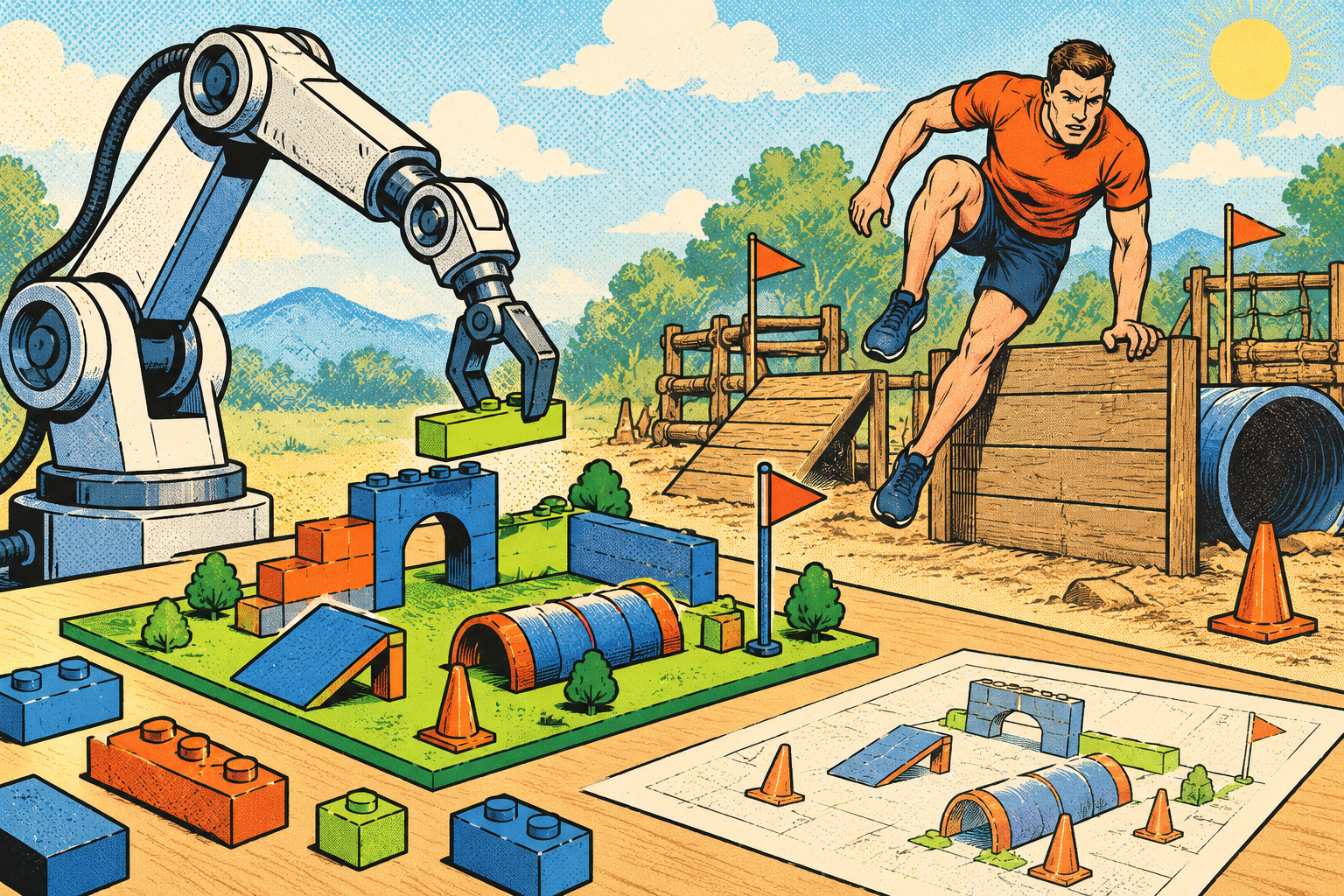
Physical AI Toolchain connects AWS and NVIDIA tools for robotics. Developers can generate synthetic training data, train a model and test it in simulation before running it on hardware. The code is available in AWS Samples.
Start with individual components. AWS recommends adding the component needed for the task at hand instead of deploying the entire toolchain at once. For a new end-to-end workflow, the company suggests installing Foundation and OSMO first. Setup instructions and a hands-on workshop are in the repository's README.
To get started, you'll need: - An AWS account with SageMaker and EC2 GPU quotas. - An NVIDIA NGC API key and a Hugging Face token. - AWS CLI v2 and Python 3.11 or later.
A production deployment requires Terraform version 1.5 or later. The hands-on workshop does not require it.
The ready-made example teaches a UR3 robot arm with a Robotiq 2F-85 gripper to pick up and move objects. It is based on 27 recordings of a human operating a real robot. For a different robot, developers can supply their own device description in URDF format and their own data.
Cost of the first run. According to AWS's estimate dated Oct 7, 2026, a short GR00T training test on ml.g5.12xlarge costs about $2 for 15 minutes. A full run takes 11 hours and costs about $79. This is an estimate for a specific example, not a fixed price for training any robot.
Isaac Sim simulation on g6e.4xlarge costs approximately $1.86 per hour under the same AWS estimate. A full OSMO deployment with EKS, RDS and ElastiCache costs about $5 per hour. These costs are separate from training.
AWS standardizes Zarr recordings into LeRobot format, trains models through PyTorch and Hugging Face, then exports them to ONNX. On the robot itself, control is handed over to ROS 2. This connects data preparation with model execution on hardware, although deployment through EKS Hybrid Nodes and Greengrass is still planned, and Isaac Lab Arena Evaluation is in preview.
The scale of the tasks is clear from the companies featured in Amazon's official material dated Oct 8. RLWRLD is building an 8.1 billion-parameter model for manipulation tasks requiring precise movements. Config has built a workflow for processing more than 200,000 hours of robot action recordings and is expanding its training scenarios with generative AI.
NEURA Robotics founder and CEO David Reger sees the toolchain's value in faster fine-tuning, deployment on real robots and rollout across large fleets of equipment.
AWS also plans to add the hosted Amazon Bedrock AgentCore runtime.