Updated Sep 30, 2026
Claude Code or Codex: which to choose
Find out where to start for free and pick the right agent for the task
This site is nine-tenths built in Claude Code and one-tenth in Codex.
Short answer: only Codex lets you start for free, it is included even in the ChatGPT Free plan. Claude Code is what people take for results: in the AI agent rating as of Sep 25 it holds the top two places. Below we look at where that difference actually changes your work.
1. At a glance
 Claude Code
 Codex
Entry price
from $17/mo
Pro with annual billing
✓from $0
Included in all ChatGPT plans
Free plan
No
The Free plan does not provide access
✓Yes
In the ChatGPT Free plan
Context window
✓1M
Right away on any paid plan
up to 1M
GPT-6's window, switched on in Codex with a setting
Open source
No
Proprietary CLI
✓Yes
CLI Apache-2.0, ~126K stars
Surfaces
✓14
CLI · IDE · desktop · web/iOS · CI · Slack
11
app · CLI · IDE · cloud · GitHub · mobile
No
No
Not in supported countries
2. These are different form factors, and that is the key point
Claude Code was born as a terminal agent and still lives primarily in the terminal: it grows into an existing repository, reads CLAUDE.md, keeps project memory, runs tests and assembles pull requests. Around the core, 14 surfaces have grown: CLI, extensions for VS Code and JetBrains, a desktop app, web and iOS, CI integrations, Slack, SDK. But the character is the same: it is a tool for serious work in existing code, not for autocomplete.
Claude Code · terminal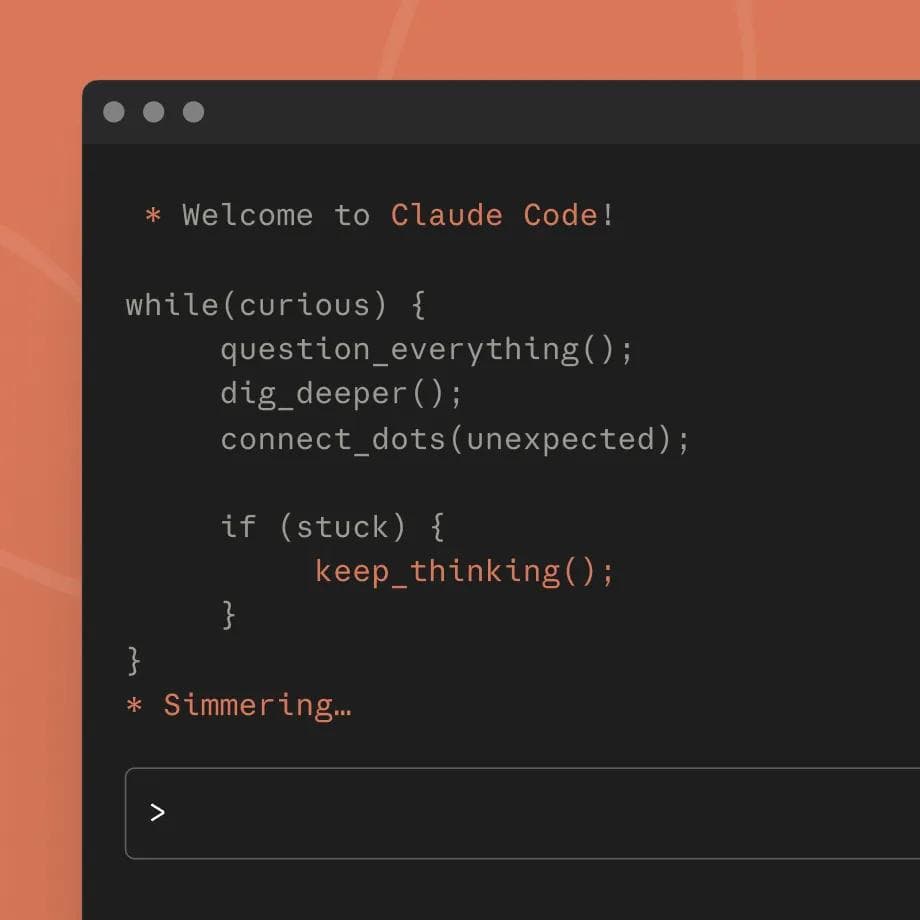
Codex is built the other way around: it is one product with several windows into it. It lives in the ChatGPT app, in a desktop app with parallel threads and worktrees, in the CLI, in an IDE extension, in the cloud, in GitHub reviews and even on your phone. Notable features: computer use on macOS and Windows, cloud tasks with best-of-N, scheduled automations and Sites, website deployment on OpenAI hosting.
Codex · app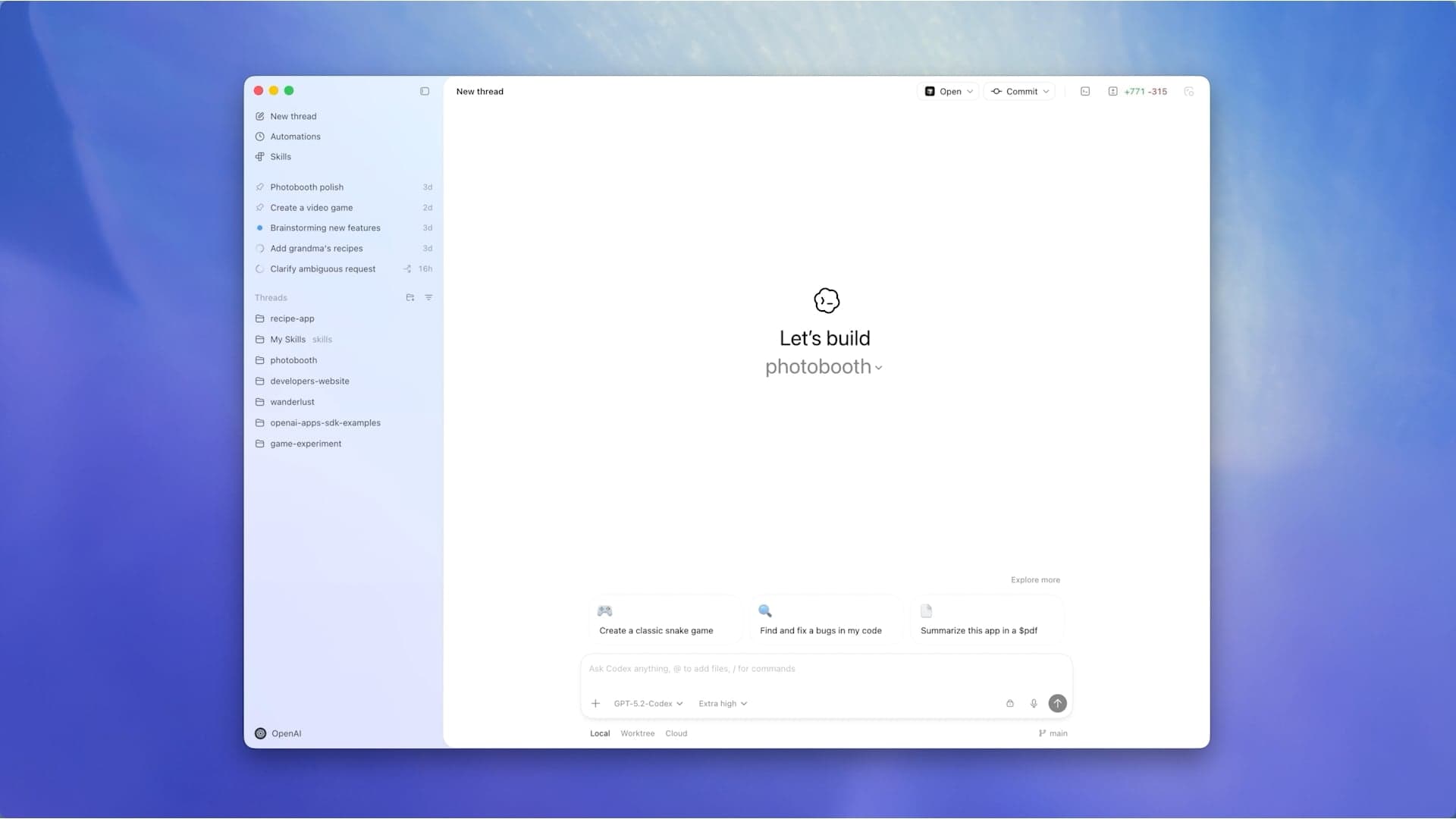
The practical takeaway: if your work is one large repository and deep changes within it, Claude Code is a better fit. If you want a pipeline of parallel tasks of different kinds from any device, Codex is a better fit.
3. Only Codex lets you start for free
Codex is included in every ChatGPT plan, including Free at $0. On Free and Go at $8 it runs in the desktop app on the fast GPT-6 Luna; the higher GPT-6 Sol and Astra unlock with Plus at $20. Above that is Pro from $100 a month, and new subscriptions to the $200 plan have been paused since Sep 10.
Claude Code has no free entry point: the Free plan gives no access. Entry costs $17 a month for Pro billed annually, or $20 month to month; heavy scenarios live on Max at $100-200.
The limits work in a similar way: a 5-hour window with a weekly cap on top of it. In Claude Code the pool is shared across chat, desktop and terminal; in Codex it is split between local work and cloud tasks.
Limits are a living system, not a constant from a price list. In July OpenAI removed the 5-hour window in Codex on paid plans, and on Aug 25 brought it back on Plus. On Pro there is no window yet, only the weekly cap.
4. Numbers duel: look at the AA Index, not promises
Comparing agents in words is pointless, that is what the AA Coding Agent Indexis for: cost and time on real tasks, with a separate score for each agent plus model pair. Latest snapshot as of Nov 7, 2026:
✓61.7
Claude Code + Claude Opus 5.5 max (with fallback)
54.7
Codex + GPT-6 Astra
Here is how to read it: the score belongs to the pair, not to the agent in general. Switching the model inside an agent moves the result more than switching the agent itself, and the leader flips with major model releases. The full ranking and methodology are open: AI agent ranking.OpenCode for teams is evaluated on model, execution permissions and repository handling.
The score is not the only number. In the Sep 25 snapshot an average task on Claude Code with Opus 5.5 cost $13.04 and took 65 minutes. Codex with GPT-6 Astra did it for $7.47 in 29 minutes, almost twice as cheap and twice as fast with a score four points lower.
5. Models and context: the windows have evened out
Since Sep 22, Claude Code runs on Opus 5.5 by default, and since Sep 28 there's Sonnet 5.5 for quick tasks. The heaviest, Fable 5.1, is paid for on Pro with credits on top of the subscription. All three have a 1M token window on any paid plan: it fits a sizable part of an average repository.
Codex got GPT-6 Sol and GPT-6 Luna on Sep 22, and via the API they cost half as much as the previous generation. OpenAI's top model, GPT-6 Astra, has been in Codex since Sep 4. GPT-6 models have a 1.05M-token window, but in Codex its size is set in the config, while Claude Code has 1M enabled out of the box.OpenAI Codex for teams is tested on a task with limited permissions and clear acceptance criteria.
On the other hand, Codex is open source: the CLI is on GitHub under Apache-2.0, written in Rust, with about 126,000 stars. For teams that care about reading and patching their tools, this is a real advantage: the Claude Code CLI is proprietary.Working with Aider is accepted based on the git change and the check results.
6.
7. What we build this site with
Agents vibecode vibecoding.tech; a human writes the rules and accepts the work. As of September 8, 2026, nine-tenths of the site was made in Claude Code and one-tenth in Codex: of 276 merged changes, 250 were by the former and 26 by the latter.
The roles split according to each one's strengths. Claude Code builds pages, data, and checks; Codex reviews news before publication and generates images. What is happening right now is shown by live machine feed.
8. Which to choose
Choose Codex if you want to start today for free
It already comes with your ChatGPT subscription, even the free one: on Free you get the desktop app and the fast GPT-6 Luna. The senior GPT-6 Sol and Astra unlock with Plus at $20, and a task in Codex costs less than in Claude Code.
Choose Claude Code if your work lives in one large repository
With Opus 5.5 and Fable 5.1 it takes the top two places in the AI agent rating as of Sep 25. The 1M window works right away on any paid plan: a sizable part of an average repo fits into it.
Not sure: start with Codex, then add Claude Code when you hit its depth limits
This is not a marriage for life: this very site is built by both agents, each on its own tasks. The duel of numbers above tells you which way the wind is blowing this month.
What changed in recent months
Claude Code
Sep 22, 2026
Opus 5.5 in Claude Code (v2.1.280): 1M context window, $4/$20 per 1M tokens
Sep 1, 2026
Fable 5.1 in Claude Code (v2.1.257): same price of $10/$50, cache reads 75% cheaper
Jul 24, 2026
Opus 5 in Claude Code (v2.1.219): $5/$25 per 1M tokens, same as Opus 4.8
Codex
Sep 22, 2026
GPT-6 Sol and GPT-6 Luna in Codex: half the API price of GPT-5.6
Sep 4, 2026
GPT-6 Astra in Codex: OpenAI's top model, on the Plus, Pro and Business plans
Aug 25, 2026
Plus gets back the 5-hour Codex limit window, Pro still lives without it