
Analysis · vibecoding / terminology
What is AI programming called: a dozen names, two chosen by the market
One phenomenon: AI writes the code, the person says in words what to build. Over three years, it has accumulated a dozen names - from AI pair programming to spec-driven development. By mid-2026, the market had settled on two: vibecoding - for the mainstream segment (Collins word of the year 2025) and agentic engineering, in Russian - agentic development, - for professionals. The best part of this story: both terms were coined by the same person - one year apart.

Evgeny Shilov
text compiled by the editorial team's AI agents under the author's supervision · facts verified against primary sources 07.07.2026
Why the arguments never end: it is simply a new level of abstraction
The entire history of programming is a ladder of abstractions: every rung hid a detail previously considered "the essence of the profession." Assembly hid numeric operation codes, the compiler hid registers, Python hid memory, and the agent hides syntax. Natural language is not the end of programming but its next floor: Karpathy framed this as "Software 3.0" - the prompt becomes the program, and the LLM its interpreter.
every rung met the same grumbling · history's score: 5:0 for abstraction
The same thing happened at every rung: first, "this is not real programming," then, "well, it will do for prototypes," then it becomes the default - and the marker word dies of irrelevance. Nobody says "compiler programming": it is simply programming.
Hence the prediction: terms of a transitional era dissolve when the phenomenon becomes the default. "Vibecoding" and "agentic engineering" are names for the bridge between eras; once the bridge is crossed, only "programming" will remain - at the most powerful available level of abstraction. The map of terms below is a snapshot of the moment while the phenomenon still has names.
Timeline: how the phenomenon searched for a name
History came full circle: Karpathy coined vibe coding as a "shower tweet" about weekend projects - and a year later introduced agentic engineering himself, because his own word was not enough for serious work. The author of the term was the first to outgrow it.

Map of terms: who, what, and what survived
Russian-language segment
A telling episode in the Russian-language segment: the Habr longread "How vibecoding drove me to depression, then led me to vibe engineering" repeated Willison's trajectory - Russian-language arguments follow the same path as English ones, lagging by a couple of months.
What we call it: a glossary of verdicts
For every new AI coding term, we establish a Russian name: the verdict, date, and measurement it rests on (search suggestions, frequencies, practitioners' language). Argue over what is correct - send a link to this table. We do not discard alternative names: a term card can be found by any spelling.
The glossary grows alongside the term: it appears in the feed - a row in the table; it takes hold in practitioners' speech - its own page; search demand appears - a full concept card, like loops.
One spectrum instead of a war of terms
The mistake in most arguments is treating vibecoding and agentic engineering as competitors. They are not two camps but two ends of one scale, differentiated not by the tool (everyone uses agents), but by the amount of engineering around the result:
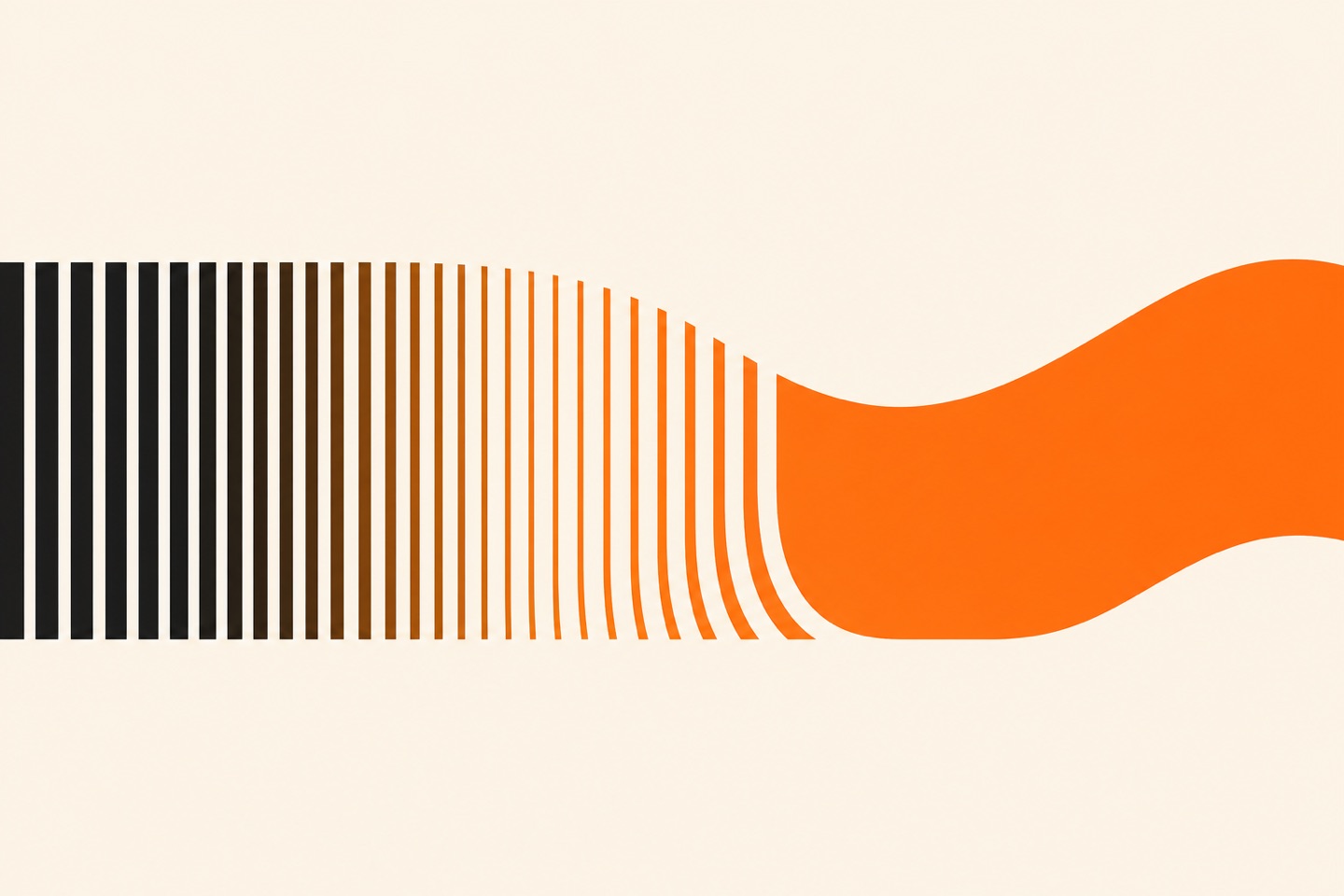
the left lifts the floor: anyone can build software · the right lifts the ceiling: quality at agentic speed · axis - Karpathy's framing (Sequoia Ascent 2026); Willison's criterion: do you read the diffs
"Vibecoding lifts the floor: almost anyone can create software by describing what they want. Agentic engineering lifts the ceiling: it is the professional discipline of coordinating fallible agents - while preserving correctness, safety, taste, and maintainability."
original (EN)
"Vibe coding raises the floor. It lets almost anyone create software by describing what they want. [Agentic engineering] raises the ceiling. It is the professional discipline of coordinating fallible agents while preserving correctness, security, taste, and maintainability."
"Experienced professionals speed up their work with LLMs while remaining proudly and confidently responsible for the software they produce." Willison candidly added that his name "vibe engineering" was "probably stupid" - and by February 2026 acknowledged that agentic engineering was winning.
original (EN)
"...seasoned professionals accelerate their work with LLMs while staying proudly and confidently accountable for the software they produce."
Why vibecoders are mocked - and why that is a good sign
The mockery has an honest side: carelessness is a real problem, and the critics' numbers are real. METR uncovered the most uncomfortable fact in a rigorous experiment: experienced developers using AI tools took 19% longer - while believing they had sped up by 20%. But the mockery itself is not an argument but a phase: this is how every new floor of abstraction has been received.

This pattern was described long before AI: Everett Rogers' innovation adoption curve (1962) divides people into waves - from innovators to laggards, and laggards - the last 16% - can be recognized by one trait: they laugh at what will become their own work tool a few years later. "Mom's vibecoder" is "Real Programmers Don’t Use Pascal," republished for Zoomers: the 1983 manifesto now reads like a historical anecdote, and the abstraction ladder's score is 5:0. The dividing line is not between "writes by hand / generates with an agent" (everyone uses agents in 2026, including those who mock them), but between "takes responsibility for the result / does not": reviews, tests, and responsibility distinguish an engineer from a careless beginner on any floor - whether in assembly or English.
The strongest argument against it - and what became of it
The analysis must withstand its strongest opponent - and that is not an anonymous commenter, but Edsger Dijkstra. Back in the late 1970s, he wrote an essay with the telling title - “On the foolishness of ‘programming in natural language’” (EWD667):

“Ultimately, the ‘naturalness’ with which we use our native language comes down to the ease with which we can make statements in it whose meaninglessness is not obvious.” The precision of formal languages, Dijkstra insisted, - is not an annoying barrier, but their greatest achievement: it makes nonsense visible.
original (EN)
"When all is said and told, the 'naturalness' with which we use our native tongues boils down to the ease with which we can use them for making statements the nonsense of which is not obvious."
Dijkstra was right - for his century. As long as no one but humans could keep the imprecision of natural language in check, formality remained the only defense against nonsense. LLMs changed exactly that: for the first time, a machine can work with an imprecise formulation - it will ask follow-up questions, fill in context, offer an interpretation. But note that not has been automated: the responsibility for ensuring that what gets built is what is needed and works as it should. What remains of Dijkstra's case has not vanished - it gained a name: agentic engineering.
Frequently asked questions
Are vibecoding and agentic engineering the same thing?
No, they are two ends of the same spectrum. Vibecoding - code is accepted without line-by-line review, with product behavior as the check; agentic engineering - the same agents, but within engineering guardrails: a spec, diff review, tests, and responsibility for the result. Karpathy himself puts it this way: vibecoding raises the floor (anyone can build software), while agentic engineering raises the ceiling (professional quality at agent speed).
What is agentic engineering in simple terms?
A discipline in which an engineer neither writes code by hand nor accepts it blindly, but orchestrates AI agents: writes a spec before the prompt, reads diffs for architectural correctness, builds validation loops (tests, evals), and takes responsibility for security. The term was introduced by Andrej Karpathy at Sequoia Ascent 2026 - the same person who coined vibe coding a year earlier.
Which is correct: vibecoding, vibe-coding, or vibe coding?
The canonical Russian spelling is «vibecoding», one word and with one «d», like «frontend» or «startup». In English - two words: vibe coding. The hyphenated «vibe-coding» appears in media, but loses to the one-word form in search and pronunciation.
Who is a "mom's vibecoder"?
A mocking nickname for a beginner who has an AI agent generate code without understanding or reviewing it, then boasts about success. The meme captures a real problem (carelessness), but misses the target: the dividing line is not between "uses AI / writes by hand," but between "takes responsibility for the result / does not." Every new level of abstraction faced the same snobbery - from FORTRAN in 1954 to Pascal in 1983.
How do you say agentic engineering in Russian?
Our verdict (August 2026): "agent-based development." The word fits the familiar pattern of "mobile development / web development" and reads without translation; the direct calque "agent-based engineering" sounds bureaucratic, "vibe engineering" lost along with vibe engineering, and the transliteration is unpronounceable. The site's pair of terms: vibecoding - mass-market entry (your first weekend), agent-based development - the professional level (a system that works without you).
Which term should you use in 2026?
For mainstream conversation and search - vibecoding: Collins Dictionary recognizes the word and the audience searches for it. For a professional context - agentic engineering, in Russian - "agent-based development": the English term is used by the creator of vibe coding himself and the engineering community. The other names (CHOP, vibe engineering, neurocoding) are historical or niche.
Sources
- Karpathy - the vibe coding origin tweet (X, 02.02.2025)
- Karpathy - Software 2.0 (Medium, November 2017)
- Karpathy - "From Vibe Coding to Agentic Engineering," Sequoia Ascent 2026 (YouTube)
- Karpathy - Sequoia Ascent 2026 notes on his blog
- Simon Willison - «Vibe engineering» (07.10.2025)
- Simon Willison - «Not all AI-assisted programming is vibe coding» (19.03.2025)
- Sourcegraph - "Chat-oriented programming (CHOP) in action" (Yegge, 2024)
- Tobi Lutke - context engineering tweet (X, 19.06.2025) and Karpathy's "+1" (25.06.2025)
- GitHub - Spec Kit: spec-driven development toolkit (September 2025)
- Dijkstra - EWD667 "On the foolishness of \"natural language programming\"" (~1978)
- Ed Post - "Real Programmers Don’t Use Pascal" (Datamation, July 1983)
- METR - RCT: experienced developers using AI took 19% longer to complete tasks (10.07.2025)
- Collins Dictionary - vibe coding: word of the year 2025 (06.11.2025)
- Habr - "How vibecoding drove me to depression, then led me to vibe engineering"
- vc.ru - "Vibe coding: what it is" (an example of hyphenated spelling in Russian media)
quote translations - vibecoding.tech editors; originals below each quote and in the sources · facts verified against primary sources on 05.07.2026 · vibecoding.tech
What do you call it?
The verdict dictionary grows from practitioners' living speech: if your team has adopted a term that is not in the table, - reply to any newsletter email. We review every one.
subscribe to newsletter