September 20, 2026
Drafts from Codex sessions may have improved OpenAI models: the company does not rule it out
Mathematician Tristan Buckmaster kept drafts from his entire Navier-Stokes project in Codex sessions.
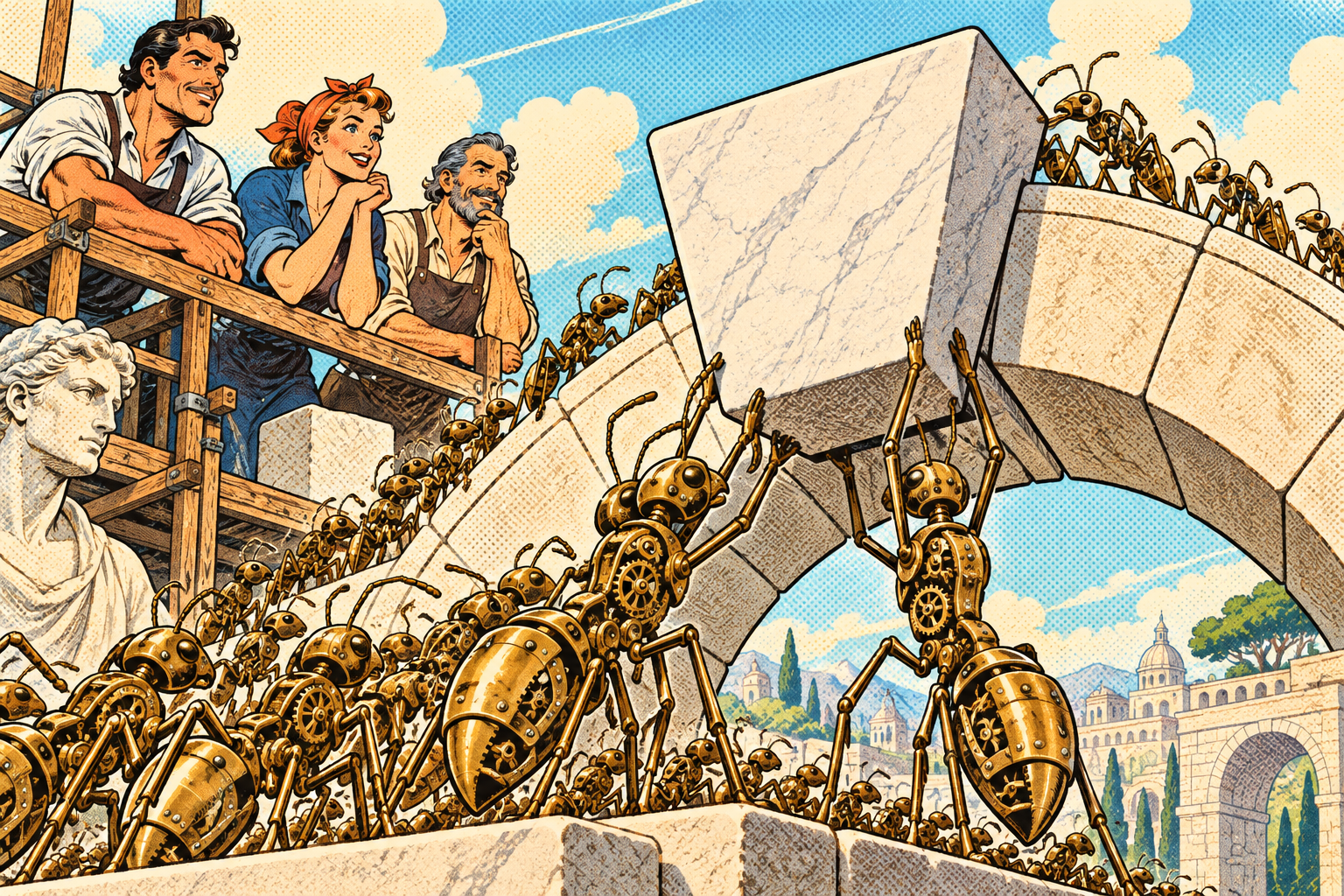
Tristan Buckmaster asked OpenAI whether its models had trained on his drafts from Codex sessions. He received no clear answer.
Buckmaster of New York University and Levent Alpoge of Anthropic announced a near-result on Navier-Stokes on 7 September. 12 hours later, OpenAI said its agents had proved the problem.
OpenAI denies direct access to Buckmaster’s materials, but acknowledges it cannot rule out: anonymized data from use of its products may have helped improve the models. That condition covers anyone who keeps working drafts in an agent session.
The machine’s tally. OpenAI’s run involved around 10 000 autonomous agents: 88 hours, nearly 5 million messages between them, and a compute bill of several million dollars (Quanta Magazine, 08.09).
Cannot be replicated. The computation ran on an internal OpenAI model that is not publicly available. According to MIT Technology Review, it vastly outperforms Astra, released a week earlier. Buckmaster and Alpoge worked with public models: Claude and Codex on GPT-5.6 Sol for reasoning, Astra for auditing and text.
Previously, a proof like this would have brought a person a prize and peer recognition. Now there is no one to claim the prize: OpenAI has publicly declined to seek the $1 million Clay Mathematics Institute award for the millennium problem.
The dispute is over credit. Sebastien Bubeck of OpenAI says they did not use others’ prompts or proofs in the work, and later acknowledged Alpoge and Buckmaster’s priority. Buckmaster himself says he was offered the prize only on the condition that Alpoge’s name be removed because of his work at Anthropic.
OpenAI published the Lean certificates in the openai/NavierStokesAndEuler repository: Lean 4.34.0-rc2 with Mathlib, built with two commands, with instructions for independent verification in the ComparatorChallenges subfolder. Lean accepted the 166-page proof, but human mathematicians have not substantively read it (Science News, 08.09).
Terence Tao, one of the world’s best-known mathematicians, warns that tackling open problems as a career strategy could destroy the ecosystem from which the next generation of mathematical techniques and practitioners would emerge.
Until mathematicians examine the 166 pages on the merits, the proof remains an OpenAI claim.