September 21, 2026
OpenAI’s mathematics advisory board will not be able to slow it down: its 9 scientists can only advise
OpenAI says it has solved more than 100 open math problems; the public has seen 10.
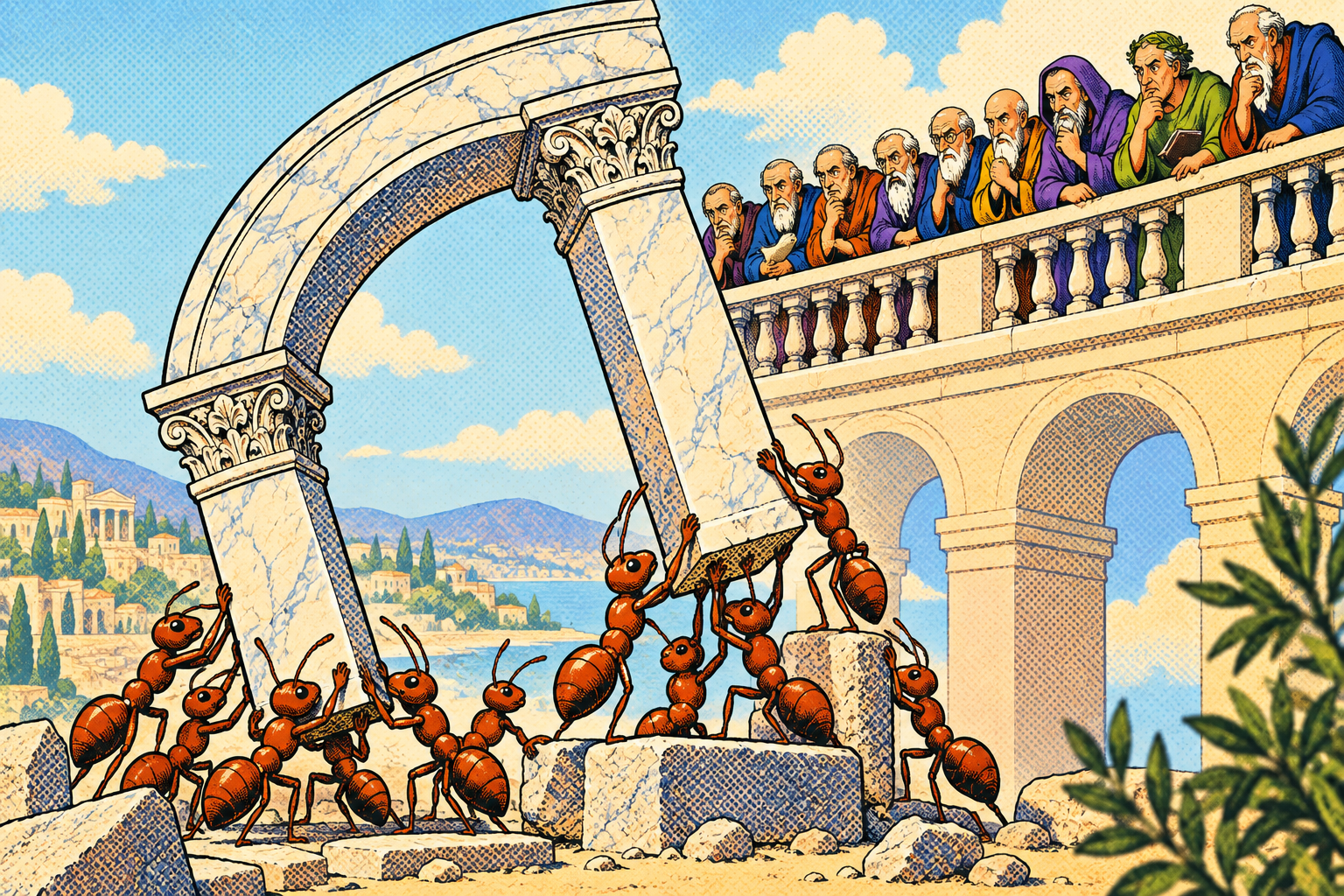
A proof of singularity in the Navier-Stokes equations was assembled by roughly 10,000 agents in 88 hours.
Another 17 hours went into formalization, with nearly 5 million messages exchanged between agents. The compute cost several million dollars, according to OpenAI's Sebastien Bubeck. The Euler equation took roughly 100 agents and 50 hours.
The result was verified in Lean: this system reads a proof line by line and does not take the author's word for it.
A council was assembled for this kind of output. OpenAI invited 9 mathematicians and stated their first task plainly: advise on how to release the large number of significant results produced by its internal model.
Advisory power only. The council cannot stop or redirect OpenAI research. The scientists work unpaid, are said to be independent of any AI company, and promise to publish their recommendations on their own website — including unsolicited ones.
Of more than 100 solved problems, OpenAI showed 10.
Previously, the dispute played out from the outside. On September 11, 26 Fields Medalists signed the mathandai.org declaration, including Terence Tao and Peter Scholze: the goals of AI labs are misaligned with those of mathematics, and these questions must be addressed urgently.
Now one of the signatories sits on the council. Camillo De Lellis of IAS is the only one of the 9 who also signed the laureates' letter.
You cannot reproduce it. The model that produced these results is unavailable to the public. OpenAI describes it as substantially more capable than GPT-6 Astra.
GPT-6 Astra is available for practical use today: a 1 050 000-token context window, $10 per million input tokens and $50 per million output tokens (OpenAI docs, 22.09.2026).
The council promises to publish its recommendations on agmai.org — then it will become clear what exactly it advises.