«Inworld has acquired Ultravox, a platform for building voice agents that listen, reason, call tools and respond in live conversations. The…» — 🚨 AI News | TestingCatalog
«Inworld has acquired Ultravox, a platform for building voice agents that listen, reason, call tools and respond in live conversations. The…» — 🚨 AI News | TestingCatalog
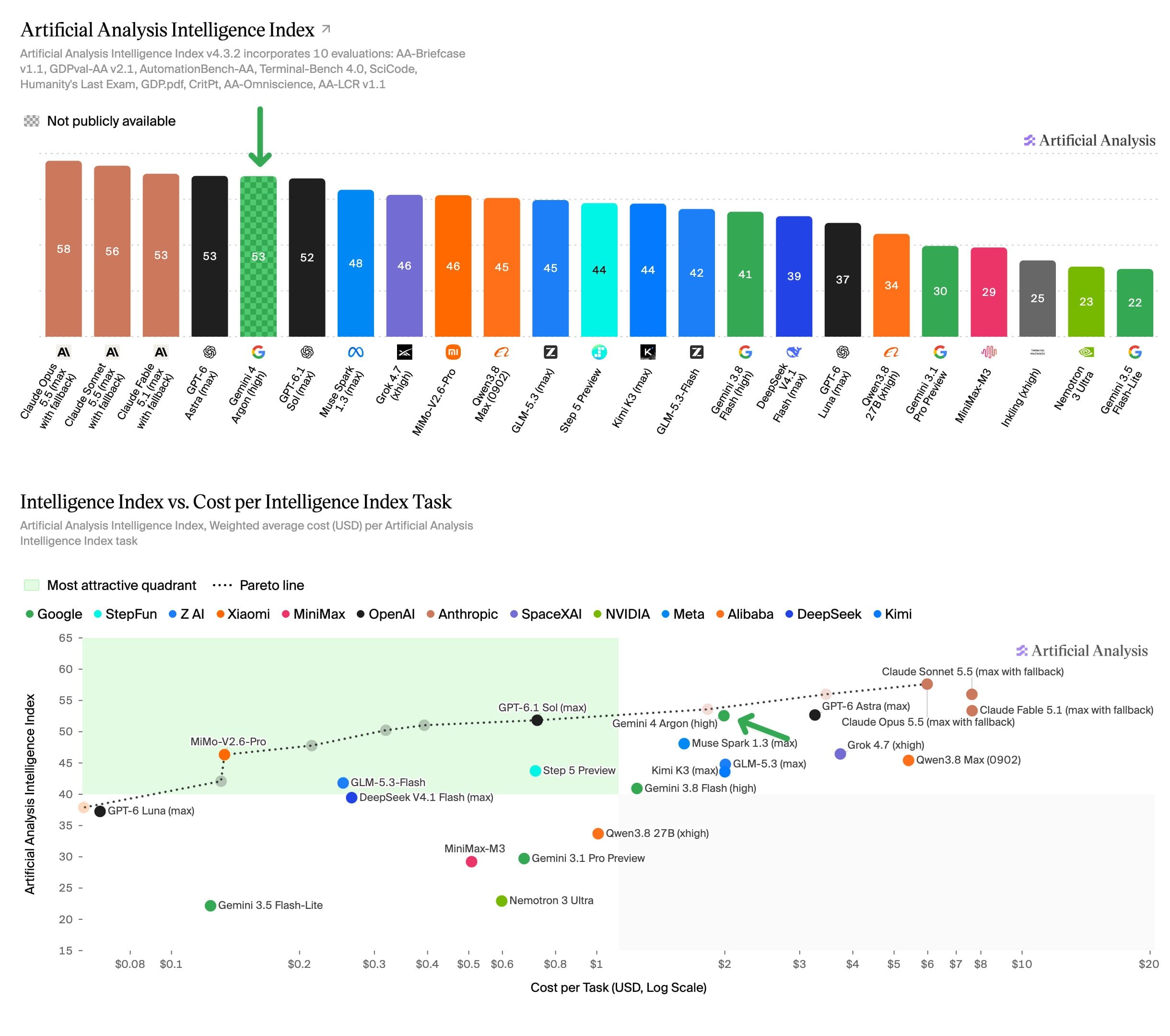
«Google's new Gemini 4 Argon has matched GPT-6 Astra in the Artificial Analysis Intelligence Index, and with discounts, a task costs 60% of…» — Artificial Analysis
«Google's new Gemini 4 Argon has matched GPT-6 Astra in the Artificial Analysis Intelligence Index, and with discounts, a task costs 60% of…» — Artificial Analysis
«https://Claude.dev — our new home for developers building apps with Claude.
You'll find in-depth engineering articles, guides to Claude Co…» — ClaudeDevs
«https://Claude.dev — our new home for developers building apps with Claude.
You'll find in-depth engineering articles, guides to Claude Co…» — ClaudeDevs
«Space Bunny Alpha update:
The provider has improved the model's speed and stability, and the stealth period has now been extended until Oct 5.
Try it again and let us know how it performs: https://openrouter.ai/stealth/space-bunny-alpha
Thanks for continuing to share your feedback!»
«Space Bunny Alpha update:
The provider has improved the model's speed and stability, and the stealth period has now been extended until Oct 5.
Try it again and let us know how it performs: https://openrouter.ai/stealth/space-bunny-alpha
Thanks for continuing to share your feedback!»
«🚀 The latest @code release makes it easier to work across repositories and worktrees and delegate tasks to remote agent hosts.
🧵 Here's what's new:
https://code.visualstudio.com/updates/v1_140»
«🚀 The latest @code release makes it easier to work across repositories and worktrees and delegate tasks to remote agent hosts.
🧵 Here's what's new:
https://code.visualstudio.com/updates/v1_140»
«Public profiles bring your Sites and plugins together in ChatGPT so others can discover and use what you've created.
Made something? Show…» — OpenAI Developers
«Public profiles bring your Sites and plugins together in ChatGPT so others can discover and use what you've created.
Made something? Show…» — OpenAI Developers
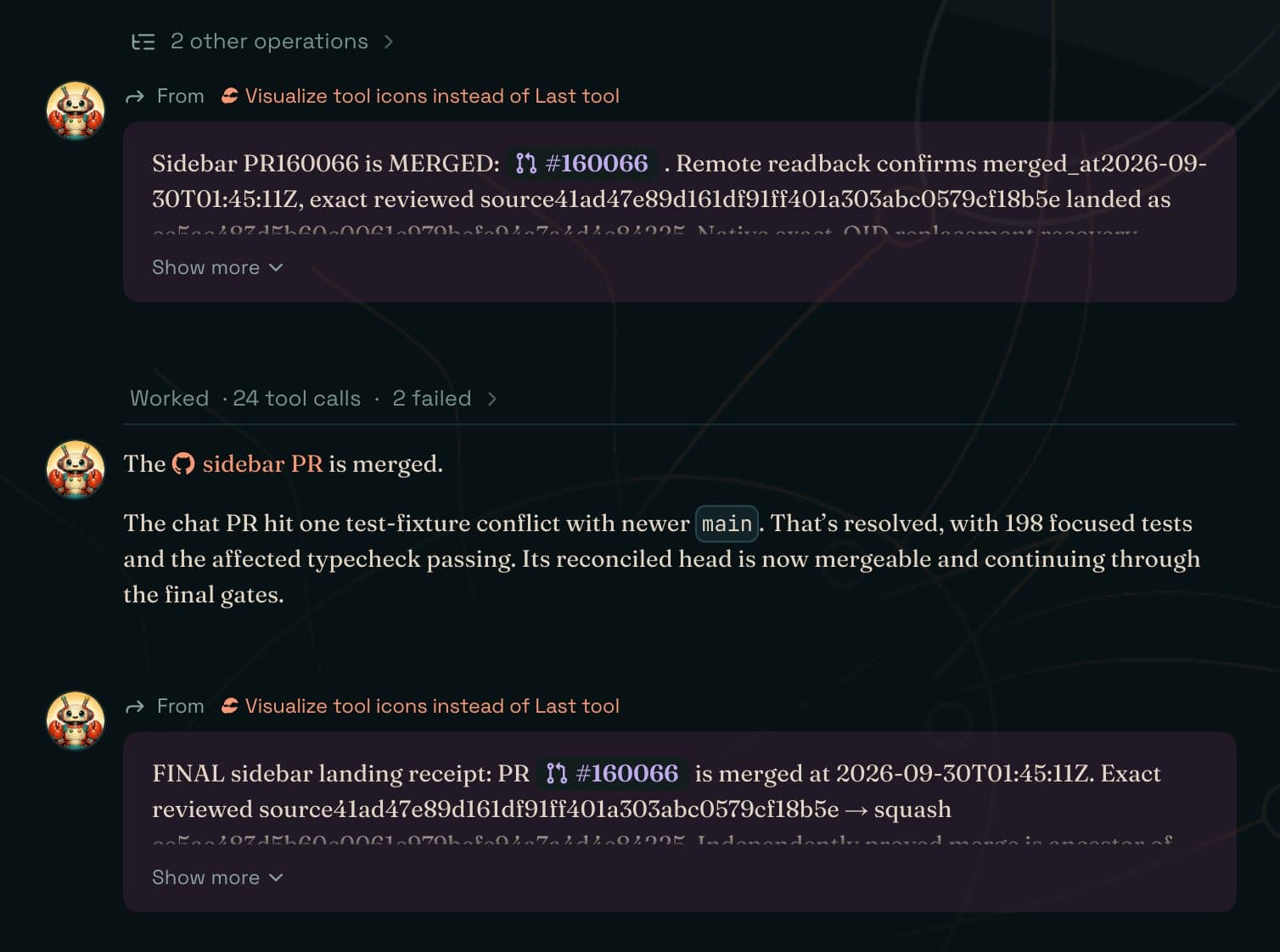
«Agent-to-agent communication in the chat stream is annoying me more and more. In the OC harness, I collapsed it into a single expandable ro…» — Peter Steinberger 🦞
«Agent-to-agent communication in the chat stream is annoying me more and more. In the OC harness, I collapsed it into a single expandable ro…» — Peter Steinberger 🦞
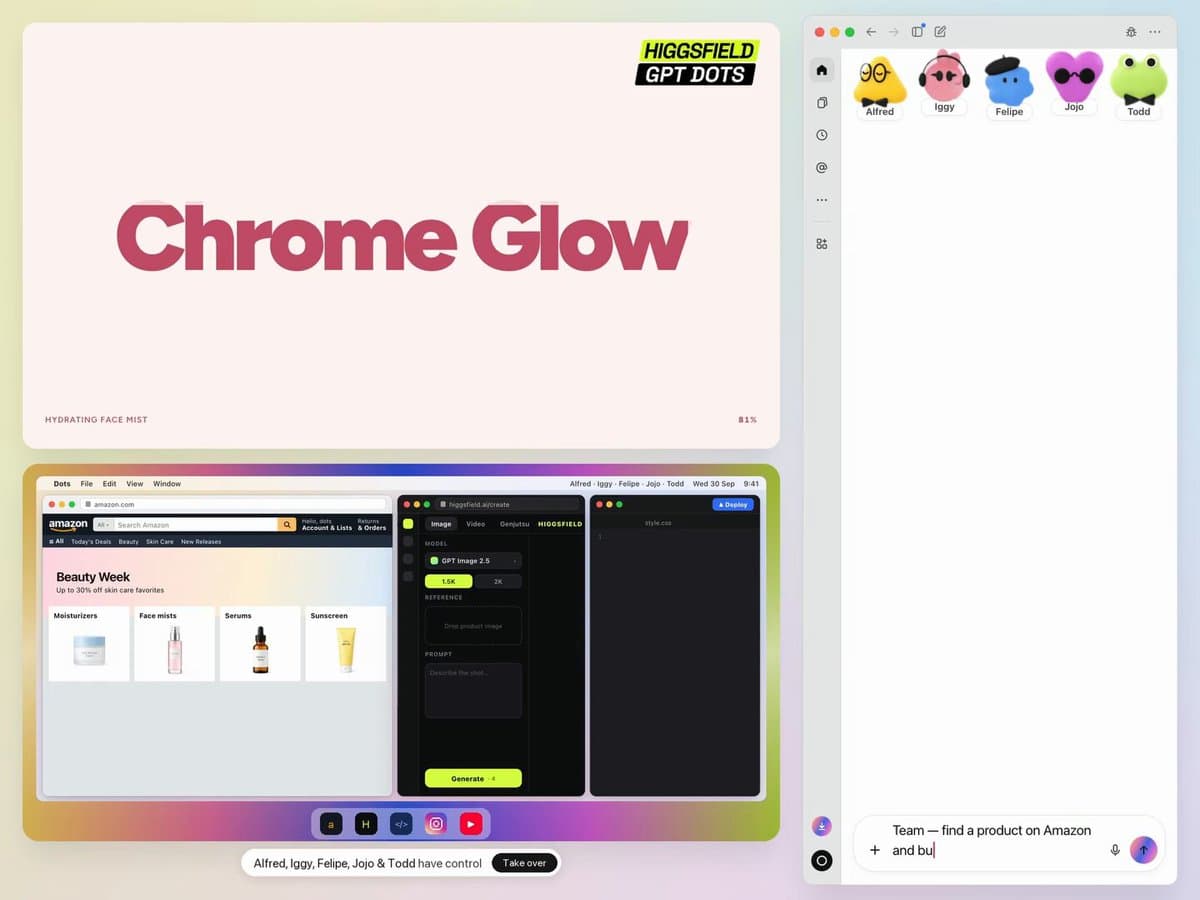
«Five OpenAI Dots agents work with Higgsfield to take a product from research to a full brand launch.
They create a website and brand ident…» — Higgsfield AI 🧩
«Five OpenAI Dots agents work with Higgsfield to take a product from research to a full brand launch.
They create a website and brand ident…» — Higgsfield AI 🧩
«Voyage AI rerank-3 and rerank-3-lite from @VoyageAI are now available on OpenRouter
They are drop-in replacements for rerank-2.5 and rerank-2.5-lite. The models are designed for long documents and code search
https://openrouter.ai/voyageai»
«Voyage AI rerank-3 and rerank-3-lite from @VoyageAI are now available on OpenRouter
They are drop-in replacements for rerank-2.5 and rerank-2.5-lite. The models are designed for long documents and code search
https://openrouter.ai/voyageai»
«Introducing Ideogram 4.5, the most precise image editing model.
With each edit, leading models introduce artifacts, shift pixels and chang…» — Ideogram
«Introducing Ideogram 4.5, the most precise image editing model.
With each edit, leading models introduce artifacts, shift pixels and chang…» — Ideogram
«Creatify launched Boreal-H3, a video model for ad production, and Ad Agent powered by Claude Opus 5.5.
Boreal-H3 was fine-tuned from MiniM…» — 🚨 AI News | TestingCatalog
«Creatify launched Boreal-H3, a video model for ad production, and Ad Agent powered by Claude Opus 5.5.
Boreal-H3 was fine-tuned from MiniM…» — 🚨 AI News | TestingCatalog
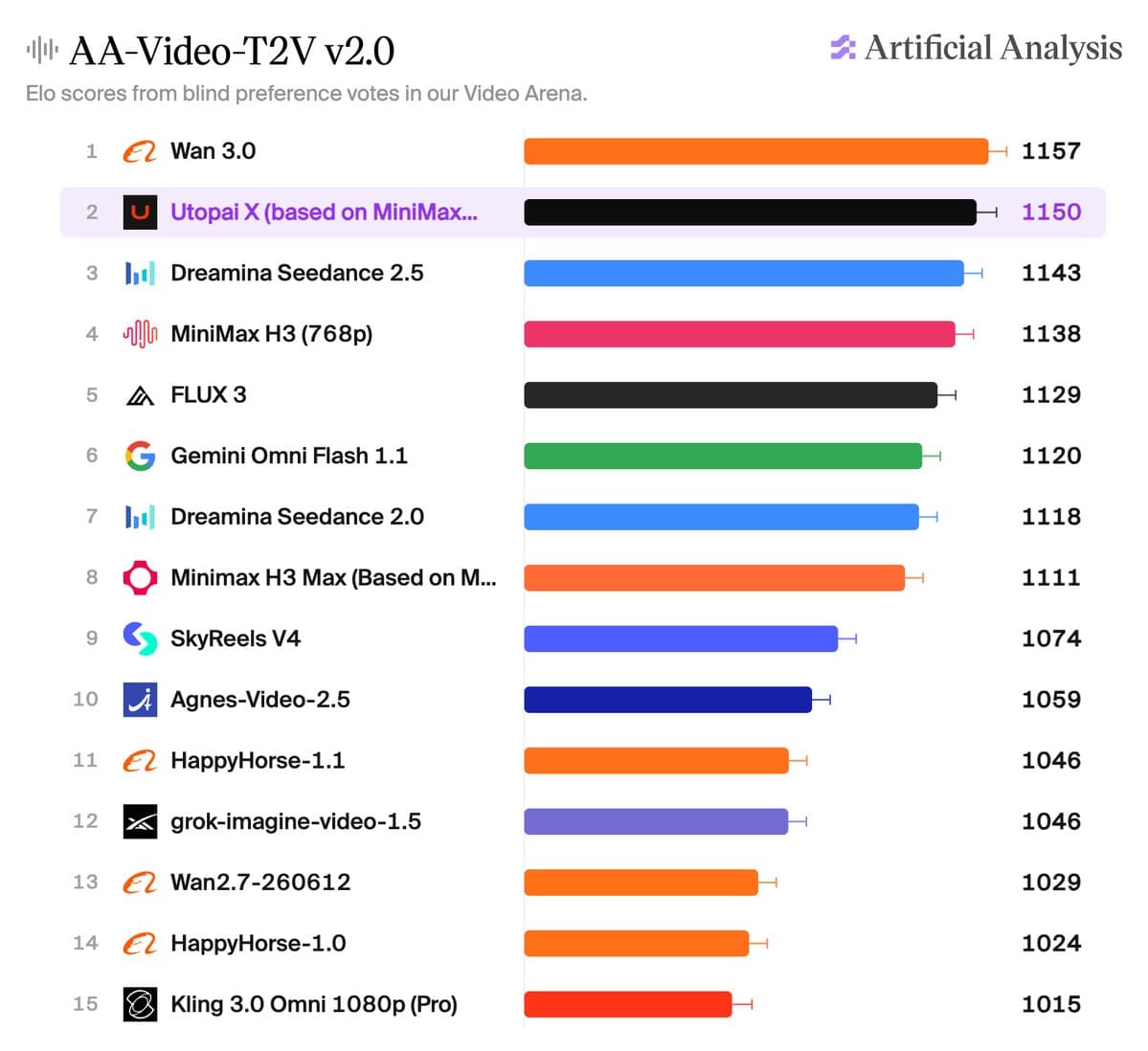
«Utopai X, built on MiniMax H3, debuts in second place on the Artificial Analysis text-to-video leaderboard, behind only Wan 3.0.
Utopai X…» — Artificial Analysis
«Utopai X, built on MiniMax H3, debuts in second place on the Artificial Analysis text-to-video leaderboard, behind only Wan 3.0.
Utopai X…» — Artificial Analysis
«We're one of the first @OpenAI Marketplace partners.
OpenAI enterprise customers can now allocate part of their existing contractual spend…» — Greptile
«We're one of the first @OpenAI Marketplace partners.
OpenAI enterprise customers can now allocate part of their existing contractual spend…» — Greptile
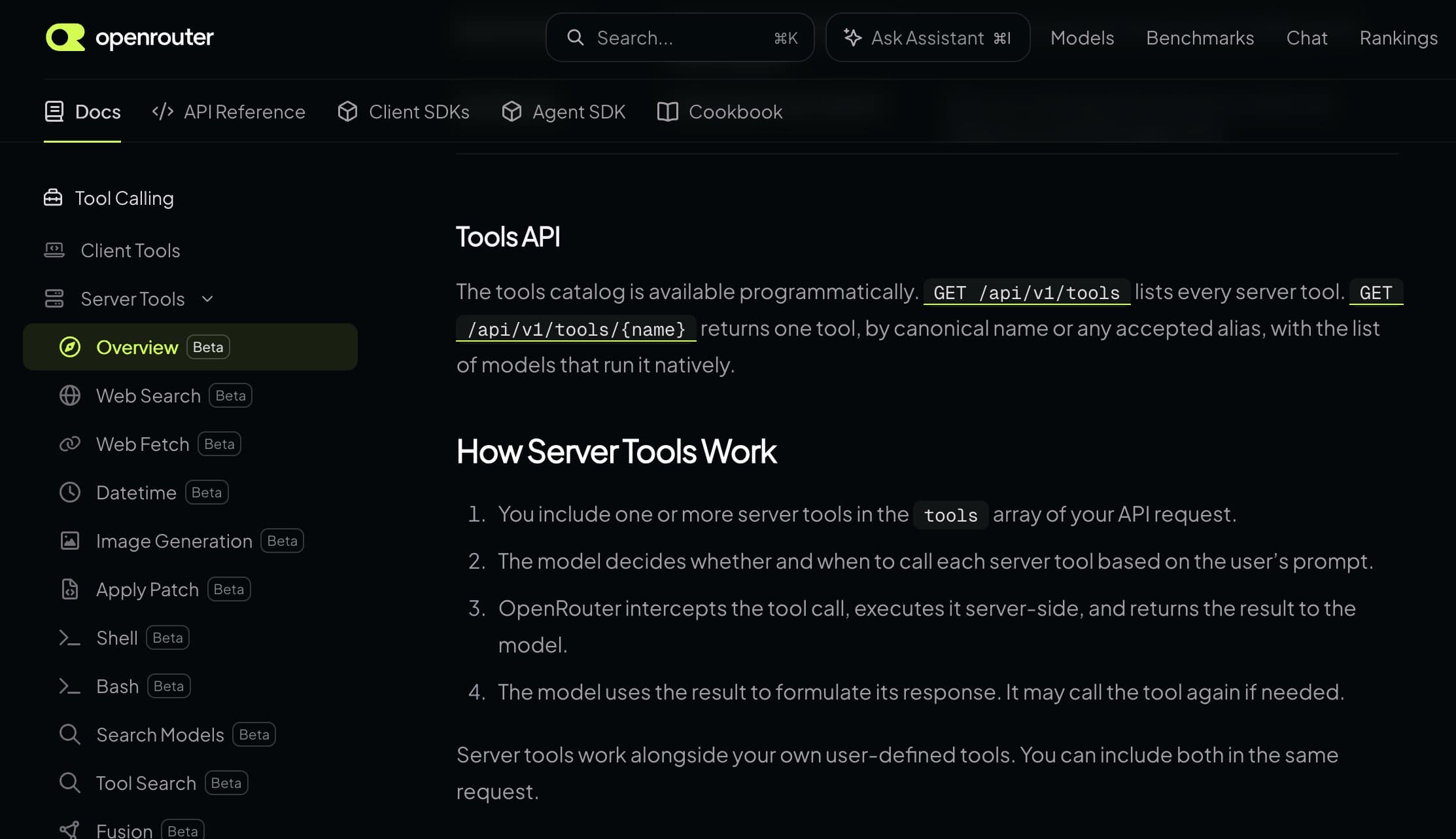
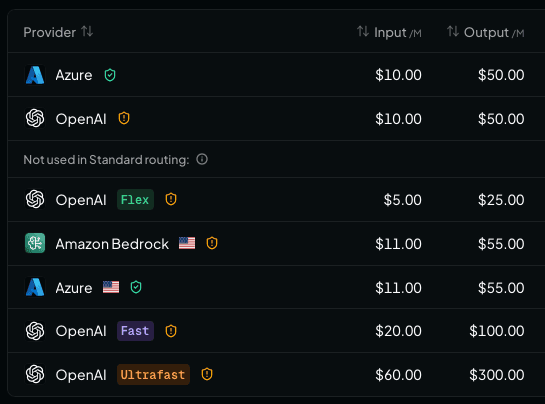
«New API: /tools
Let agents retrieve data from the Server Tools Marketplace, including the best prices on the market, and use it programmat…» — OpenRouter
«New API: /tools
Let agents retrieve data from the Server Tools Marketplace, including the best prices on the market, and use it programmat…» — OpenRouter
«I just replaced my agent's chat history with OptMem. Every message I send, every tool call and every agent response becomes a separate entry in this chat. Entries are compressed using a binary tree structure, as explained in the video. So I can talk to the agent for years, and the history will never take up more than roughly 64,000 tokens of context. The rest of the context is available for useful work. When the agent finishes a turn and I send the next message, the history is back to 64,000 tokens. In other words, I reserve 64,000 tokens for chat history, compressed using the OptMem approach, and the agent uses the rest of its context for useful work on every turn. If the agent needs more precise details from an old message, it can navigate the chat history with the zoom() tool. The agent never calls a "memo" tool itself, because there is no such tool. OptMem is the chat itself. Everything happens automatically as I talk to the agent: the entire history is compressed. Everything that happens stays in it forever, taking up just 64,000 tokens of working context. I could send 10,000 messages a day for 50 years, and the latest messages would still remain uncompressed within an 8,000-token budget. That is more than enough. Also, keep in mind: the main agent cannot read or write files; it delegates all of that to a subagent. To read a file, it calls a subagent and receives only the relevant excerpts. The main agent's job is to manage subagents and keep the big picture, rather than do the hands-on work. So memory will never be a problem again. I am ending up with a "chief assistant" that knows the full context of my life and everything I do. I will never have to type "/compact" or open multiple Claude Code chats again. If I want, I can talk to it and work from my phone, because all of this runs on my local machine. I do not even need a MacBook anymore. I just talk to the main agent, which knows the full context of my life. It can read email, clone repositories, remind me of every meeting and do all of it in the best possible way. Everything works because context management is no longer a problem. For a human life of any length, 64,000 tokens of chat history using OptMem is enough.»
«I just replaced my agent's chat history with OptMem. Every message I send, every tool call and every agent response becomes a separate entry in this chat. Entries are compressed using a binary tree structure, as explained in the video. So I can talk to the agent for years, and the history will never take up more than roughly 64,000 tokens of context. The rest of the context is available for useful work. When the agent finishes a turn and I send the next message, the history is back to 64,000 tokens. In other words, I reserve 64,000 tokens for chat history, compressed using the OptMem approach, and the agent uses the rest of its context for useful work on every turn. If the agent needs more precise details from an old message, it can navigate the chat history with the zoom() tool. The agent never calls a "memo" tool itself, because there is no such tool. OptMem is the chat itself. Everything happens automatically as I talk to the agent: the entire history is compressed. Everything that happens stays in it forever, taking up just 64,000 tokens of working context. I could send 10,000 messages a day for 50 years, and the latest messages would still remain uncompressed within an 8,000-token budget. That is more than enough. Also, keep in mind: the main agent cannot read or write files; it delegates all of that to a subagent. To read a file, it calls a subagent and receives only the relevant excerpts. The main agent's job is to manage subagents and keep the big picture, rather than do the hands-on work. So memory will never be a problem again. I am ending up with a "chief assistant" that knows the full context of my life and everything I do. I will never have to type "/compact" or open multiple Claude Code chats again. If I want, I can talk to it and work from my phone, because all of this runs on my local machine. I do not even need a MacBook anymore. I just talk to the main agent, which knows the full context of my life. It can read email, clone repositories, remind me of every meeting and do all of it in the best possible way. Everything works because context management is no longer a problem. For a human life of any length, 64,000 tokens of chat history using OptMem is enough.»
«Lovable + @Microsoft: build tools that reduce manual work with your Microsoft data.
Connectors are available today. Publishing apps in you…» — Lovable
«Lovable + @Microsoft: build tools that reduce manual work with your Microsoft data.
Connectors are available today. Publishing apps in you…» — Lovable
 ▶
▶ From a tweet@kirodotdev10/01
 From a tweet@kirodotdev10/01